This book builds on a lot of Carver's philosophies of board design, but is a lot more technical in nature, basically a technical retelling of Carver's stuff. Not that I wouldn't consider it useful, but it's not a page turner. It's the kind of thing you want when you're in the middle of the muck. Recap's Carver's definitions of a staff-level volunteer's "helpfulness interest" versus the board's "ownership interest". A big emphasis on planning.
Now, strategic planning, etc. seems to be going the way of all the world, or getting less popular at the very least. I was talking to some individuals from a large, impressive program at a huge trade association yesterday, and that seemed to be the feeling I got. If that is one's impression, then this book would be more of the same: hollow words with no action to back it up. But if you look at those kinds of plans as providing solid infrastructure on which to build your mission, then it'll be helpful from a technical perspective.
I say all that because one of the "exhibits" I found interesting from the book was this one:
 Basically, I think this is useful because it tells the board 1) what it is accountable for and 2) what it can do to meet those responsibilities. I think a lot of problems that nonprofits experience come from the fact that people (being part of nature) abhor a power vacuum and will step in when there is unclarity or a lack of direction. Now, whether or not this is a *good* structure or provides *useful* boundaries for board members is up for discussion, but at least it's a starting place.
By Doug Eadie
ISBN # 0834217953
Now, strategic planning, etc. seems to be going the way of all the world, or getting less popular at the very least. I was talking to some individuals from a large, impressive program at a huge trade association yesterday, and that seemed to be the feeling I got. If that is one's impression, then this book would be more of the same: hollow words with no action to back it up. But if you look at those kinds of plans as providing solid infrastructure on which to build your mission, then it'll be helpful from a technical perspective.
I say all that because one of the "exhibits" I found interesting from the book was this one:
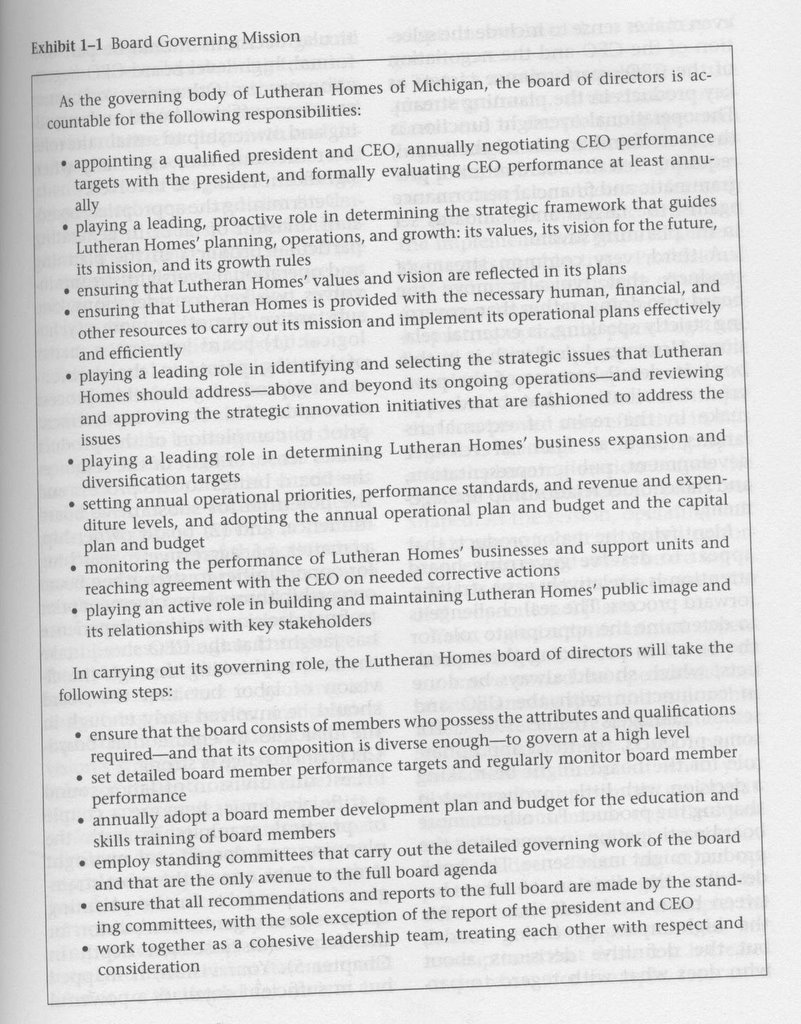 Basically, I think this is useful because it tells the board 1) what it is accountable for and 2) what it can do to meet those responsibilities. I think a lot of problems that nonprofits experience come from the fact that people (being part of nature) abhor a power vacuum and will step in when there is unclarity or a lack of direction. Now, whether or not this is a *good* structure or provides *useful* boundaries for board members is up for discussion, but at least it's a starting place.
By Doug Eadie
ISBN # 0834217953